







Public transit in an unfamiliar city breaks down into five steps, not one big unknown: Trace the route before you commit to it, Access the system correctly, Pay the right way, Ride with a clear sense of where to get off, and Pause to recover if a stop or transfer doesn’t go as planned.
Quick answer: Use public transportation alone by confirming the route and fare, paying as required, watching stops, and keeping a backup for missed connections.
Read the system before entering
Find the official route, confirm direction and fare, enter through the correct access point, watch stops, and save a backup route before boarding.
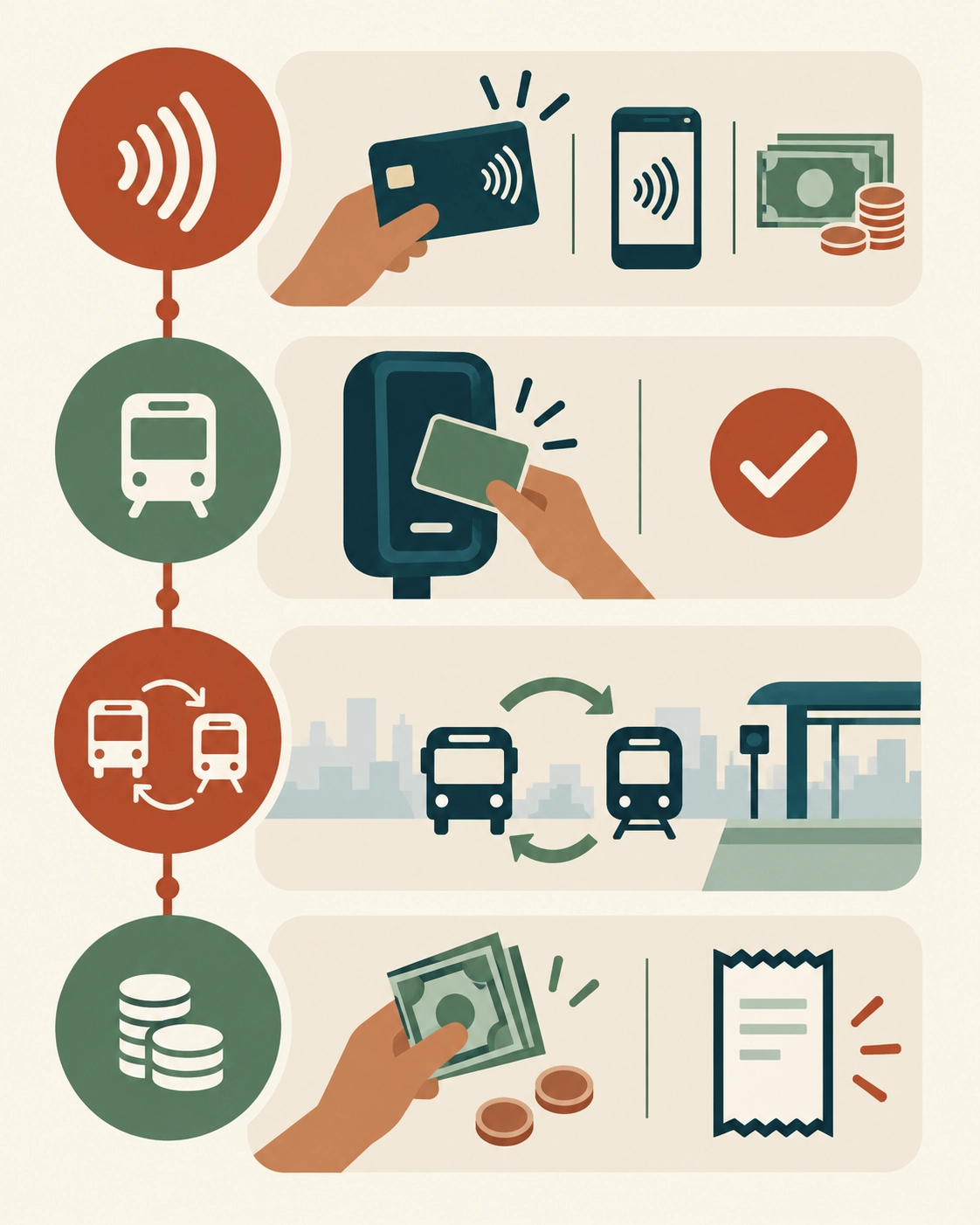
Use an official route source to confirm line, direction, entrance or stop, and operating hours before entering the system.
Before you enter a station or approach a stop, find the transit system’s official network map or route planner rather than relying on a general search result or an outdated blog post. Confirm your line, direction, the correct entrance or stop, and the operating hours for that route. Official transit-authority websites and apps are more reliable than third-party guides, which can lag behind real schedule and fare changes by months or years.
Checking the route, confirming the fare, watching the stop, and keeping a backup is one application of the same decision sequence used for every journey on a trip. The MOVE Stack system for getting around on a solo trip covers that fuller system.
Official versus third-party information
An official transit authority page will state current fares, zones, and hours. A travel blog or forum post might describe a system that changed since it was written. When the two disagree, trust the official source.
Direction and platform language
Transit systems typically label direction by the line’s endpoint stations rather than compass directions, so confirm which endpoint matches the direction you need, not just the line name or color.
Choose the fare and payment method
Often, but compare the full fare, pass rules, transfers, airport supplements, and time against walking, taxi, or rideshare for your actual route.
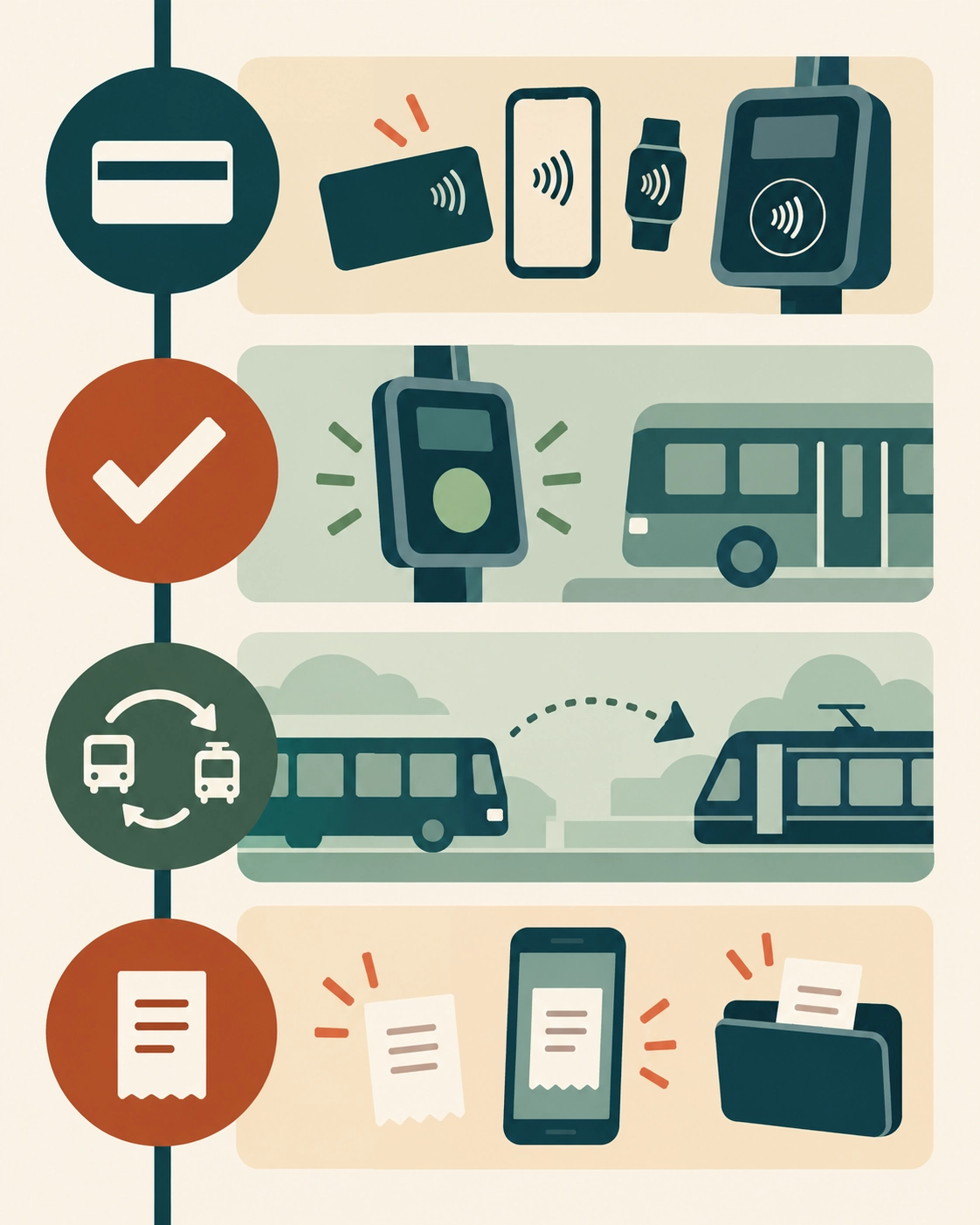
Confirm how to pay, whether to validate, whether transfers are included, whether cash needs exact change, and how to keep proof of payment accessible.
Payment methods vary widely: some systems use contactless card or phone tap, others require a physical ticket or transit card purchased in advance, and a smaller number still accept cash directly. Check the official fare page before you arrive at the platform, since figuring this out while a line forms behind you adds pressure you don’t need.
I remember standing at a fare machine in Bangkok more worried about tapping the wrong option than about anything that could actually go wrong. The fare page I hadn’t checked in advance would have saved me that minute of standing there.
What to check before boarding
Confirm whether your route requires validation (tapping or stamping a ticket before or after boarding), whether transfers are included in a single fare or charged separately, and whether you need exact change if cash is the only option.
How to keep proof of payment
In systems with random ticket inspections, keep your ticket or payment confirmation accessible until you’ve fully exited, not just until you board. A validated ticket that’s been put away in a bag can cause an unnecessary delay if an inspector asks to see it.
Take the first ride
Confirm your platform or stop against the posted signs before boarding, then track your progress with announcements, screens, or a saved offline map.

Confirm the platform and direction before boarding, track progress with available cues or an offline map, and confirm a transfer before leaving the first leg.
Enter through the marked access point, confirm the platform or stop matches your intended direction using the posted signs, and board calmly rather than rushing, since most systems hold long enough for orderly boarding. Once aboard, use onboard announcements, screen displays, or a saved offline map to track your stop rather than relying on memory alone.
Boarding etiquette and positioning
Let passengers exit before boarding, and position yourself near a door if you’re getting off soon, since a crowded vehicle can make it hard to reach the exit at your stop.
Reading stops and transfers
If your route requires a transfer, confirm the connecting line and platform before you need to make the change, ideally while you’re still riding the first leg rather than after you’ve already stepped off.
Handle uncertainty while riding
Only if that transit system accepts contactless boarding; check the official fare instructions, tap where directed, and keep a backup payment option.
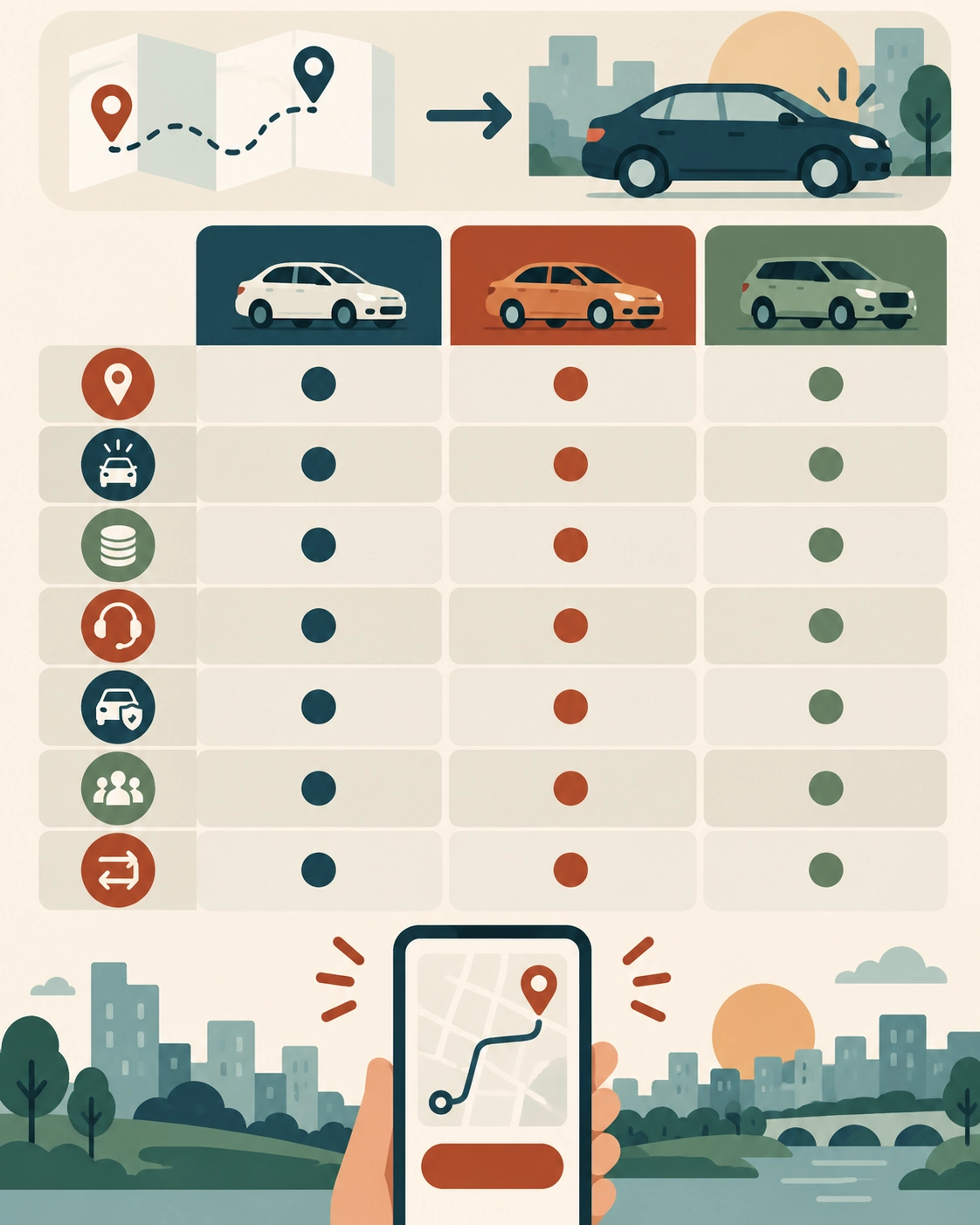
Ask staff or another passenger when unsure, get off at the next safe point if needed, check the offline map, and use a backup mode when the route no longer works.
If you’re unsure whether you’re on the right vehicle, in the right direction, or approaching your stop, ask a fellow passenger or staff member rather than waiting and hoping it resolves itself. This is a normal, low-stakes question in almost every transit system in the world, not a sign you’ve done something wrong. Setting up an offline map before you lose signal explains how to track your position without needing live data for exactly this situation.
If these small transit uncertainties add up to something closer to dread than mild friction, see the Fear & Readiness Framework for that pattern directly rather than just the logistics.
If the vehicle is crowded
A crowded vehicle makes it harder to see stop announcements or displays. Count stops from a known reference point, or ask a nearby passenger to let you know when your stop is coming, rather than trying to track it visually the whole ride.
If Google Maps isn’t your primary app, comparing offline-capable navigation apps sets out the alternatives for tracking your stop.
If you miss the stop
If you miss your stop, get off at the next one, check your offline map to confirm your position, and either backtrack on the same line or switch to your backup mode. A missed stop costs a few extra minutes, not the rest of your day. The full offline fallback stack for a dead phone or no signal shows how to recover from this if you’ve also lost connectivity at the same time.
Plan the return and last service
Some systems accept cash and others do not; confirm before boarding through the official operator and carry the required exact fare if stated.
Before you head out for the day, check the last scheduled departure for the route you’ll likely use to get back, especially if your evening plans might run long. Many systems reduce service significantly or stop entirely late at night, and finding this out on the platform at 11pm is a worse time to learn it than before you left.
End-of-day transport check
A thirty-second check of the last-departure time before you leave your accommodation prevents most of the “stranded after the last train” situations solo travelers describe.
When to use a taxi or rideshare backup
If your outing runs past the last scheduled service, or you’re unsure whether it will, budget for a taxi or rideshare back rather than waiting to see if transit resumes. The full transport decision matrix for a new city breaks down how to weigh that tradeoff for any given evening.
Examples
Normal case: A traveler checks the official transit map, confirms the correct platform and direction, and rides to their destination using a saved offline map to track stops.
Friction case: On a crowded evening train, the same traveler can’t see the stop announcements clearly and loses track of how many stops have passed.
Recovery case: They ask a nearby passenger to confirm the next stop, get off at the correct one once confirmed, and note for next time that a window seat or a spot near the door display makes it easier to track stops when the vehicle is full.
FAQ
Do I just tap my card on the bus?
Only if that transit system accepts contactless boarding; check the official fare instructions, tap where directed, and keep a backup payment option.
Is it cheaper to use public transportation?
Often, but compare the full fare, pass rules, transfers, airport supplements, and time against walking, taxi, or rideshare for your actual route.
Can you pay cash on a bus?
Some systems accept cash and others do not; confirm before boarding through the official operator and carry the required exact fare if stated.
How do I use public transport in a new city?
Find the official route, confirm direction and fare, enter through the correct access point, watch stops, and save a backup route before boarding.
Start Building Travel Readiness
Your Free Prep System.
Not tips, not wanderlust, not “just go for it” advice.
Real systems. Honest experience. One focused email a month. Get 3 Free Tools the moment you join:
1. 60-Day Solo Travel Ready Checklist
Your complete prep timeline from decision to departure
2. First 48 Hours Arrival Survival Card
The exact protocol for landing confident, not lost
3. Booking Confidence Checklist
The tool for the moment the booking button feels impossible to press
No schedule pressure. Unsubscribe any time.
Author Box
Zisco Nueda is the solo travel educator behind Solo Travel Ready, who developed the Trace, Access, Pay, Ride, Pause sequence after seeing how much uncertainty in solo travel comes from small transit uncertainties rather than anything genuinely high-stakes, including a moment standing at a fare machine in Bangkok more worried about tapping the wrong option than about anything that could actually go wrong. Fare systems, payment methods, and schedules vary by city and change over time, so confirm current details through the relevant official transit authority before you travel.
Last updated: September 2026