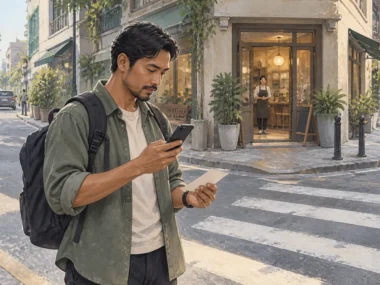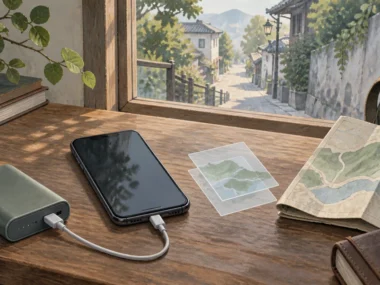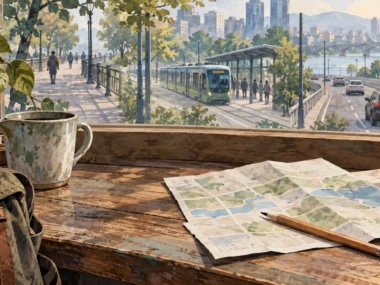






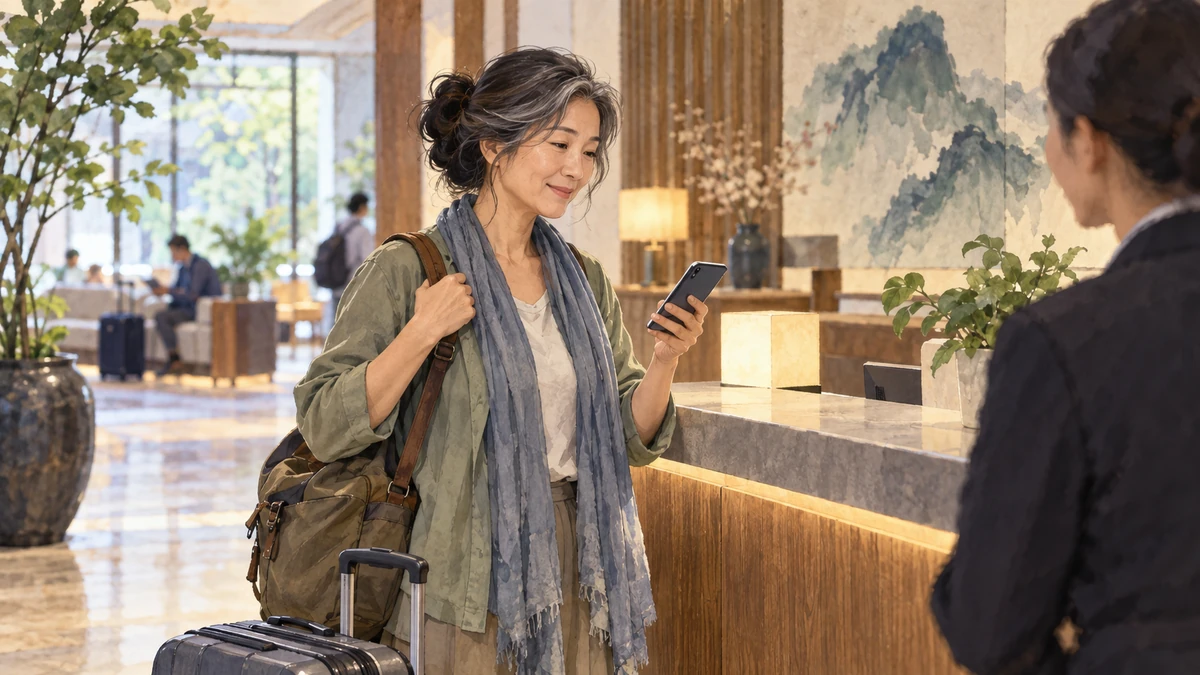
This is about getting turned around on an unfamiliar city street, not wilderness survival. Getting lost abroad in a city is a solvable, ordinary situation with a calm sequence: Stop before the wrong turn compounds, Think through your last confirmed point, Observe your actual surroundings against a reliable reference, and Proceed toward a known safe place rather than continuing to guess.
Quick answer: If you get lost abroad, stop in a visible safe place, find your last confirmed point, verify the route, and ask staffed help before moving again.
Stop before the wrong turn grows
Stop in a visible safe place, identify the last confirmed point, check a reliable map, and ask official or staffed help before continuing.
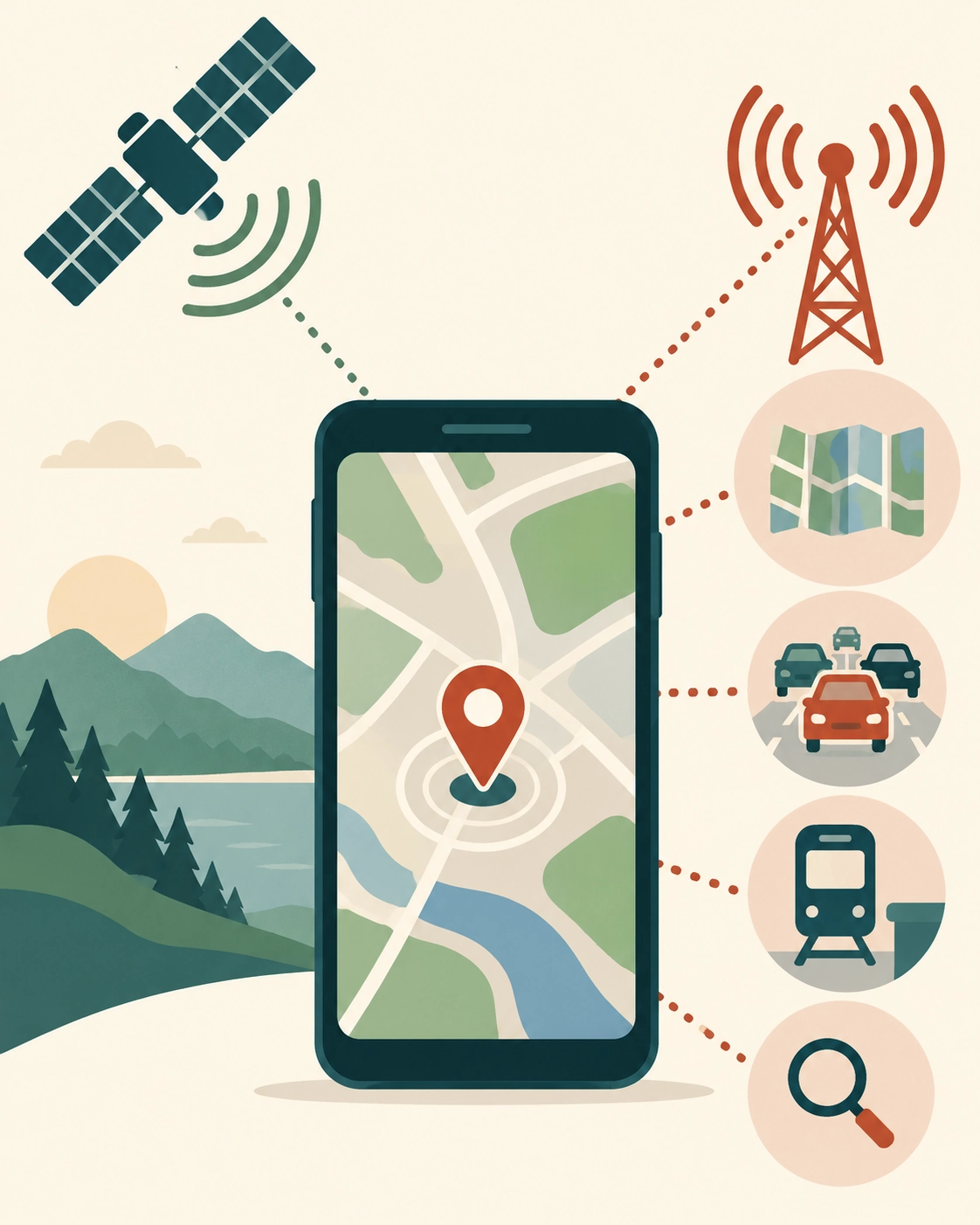
Stop in a visible safe place, think from the last confirmed point, observe reliable map and street cues, then proceed toward known help or a verified route.
The moment you realize you’re not where you thought you were, stop walking. Move to a visible, well-lit, ideally staffed location (a shop, a station entrance, a hotel lobby) rather than continuing to wander while you figure things out. Every additional block you walk while you’re lost is a block you’ll have to retrace.
Choose a safe pause point
A staffed business, a transit station, or a well-lit public area all work as a pause point. An empty side street does not, no matter how tired you are of walking.
Protect phone, wallet, and documents
Before you start problem-solving, make sure your phone, wallet, and any documents are secured, not out in your hand while you’re visibly distracted and checking a map. This is a basic precaution, not a sign of danger specific to being lost.
Stopping, reconstructing your position, and choosing the safest next leg is the same decision sequence used for every journey on a trip, not just a lost moment. The MOVE Stack system for getting around on a solo trip handles that fuller system.
Reconstruct where you are
Pause, protect your belongings, use a saved address or landmark to reorient, and contact accommodation staff or a trusted person if unsure.
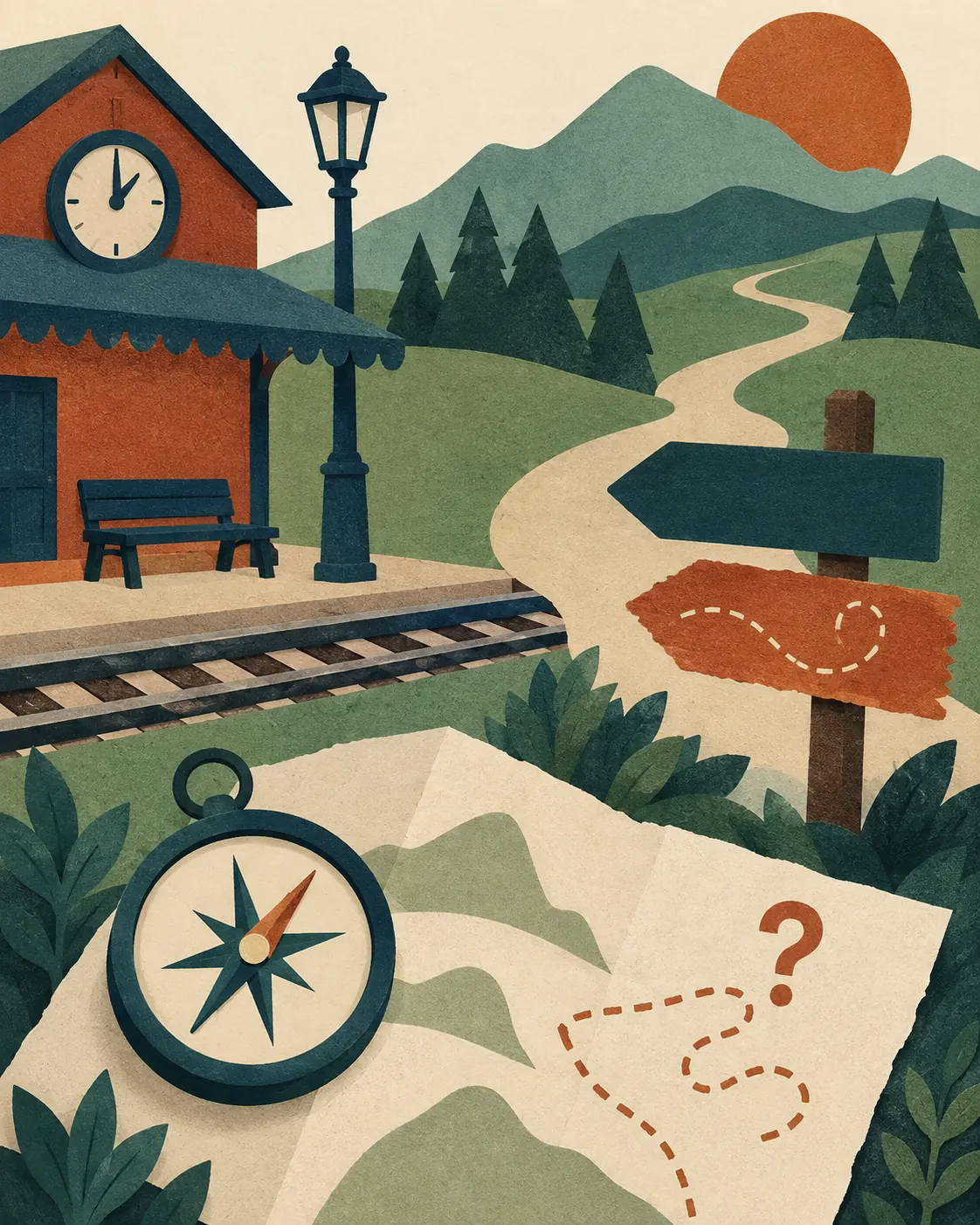
Work forward from the last place you were certain of, such as a station, street sign, or landmark, rather than trying to reconstruct the route from an uncertain current point.
Rather than trying to read a moving map dot from a confusing angle, think back to your last confirmed point: the station you exited, the last street sign you actually read, or a landmark you recognized. Work forward from that point rather than trying to piece together your entire route from where you currently stand.
Last-known-point method
Identify the most recent place you were certain of, and treat that as your reference point for checking a map or asking directions, rather than your current, uncertain position.
Check direction and map scale
Confirm which direction you’re actually facing using a street sign or landmark, and check whether you’ve been misreading the map’s scale. A route that looks like a two-minute walk can be a twenty-minute one if the scale was misjudged.
Choose the safest recovery route
Stress, unfamiliar streets, poor map scale, confusing exits, and distraction can contribute; use fixed landmarks and shorter route legs.

Choose a reasonable route to accommodation, a known transit hub, or a staffed business rather than an unfamiliar shortcut, especially when conditions are unclear.
Once you’ve figured out roughly where you are, choose the shortest reasonable route to a known public place: your accommodation, a transit hub you recognize, or a staffed business, rather than an ambitious shortcut through unfamiliar streets. A slightly longer route you’re confident about beats a slightly shorter one you’re guessing at.
I got turned around this way on a quiet side street in Southeast Asia. What got me back on track wasn’t panic, it was backtracking to the last corner I actually recognized.
Return versus continue
If you’re unsure whether continuing forward or returning the way you came is the better option, returning to your last confirmed point is usually the safer choice, since you already know that route works.
Daylight, crowds, and terrain
Prefer well-lit, populated routes over quieter shortcuts, especially after dark. A few extra minutes on a busier street is a reasonable trade for the added visibility and access to help if you need it.
Ask for verified help
Save offline maps, accommodation details, key exits, and a backup route; confirm each major turn before leaving a station or venue.

Ask transit staff, accommodation staff, or an established business first; contact a trusted person or local official emergency service only when the situation has become genuinely unsafe.
If you’re still unsure after figuring out your position, ask for help from an official or staffed source: transit staff, a hotel front desk, or an established business, rather than someone unverified on the street. Show a written or screenshotted address rather than trying to explain it if there’s any language barrier. The first-landing sequence for a solo arrival shows a version of this same “ask staff, not strangers” principle applied to the first hours of a trip specifically.
What to say
“Can you help me find this address” while showing a written or screenshotted destination is usually enough. You don’t need a longer explanation to get useful directions.
When to call a trusted contact or emergency service
If you feel genuinely unsafe rather than simply lost, use the local emergency number or contact your accommodation directly rather than continuing to try to solve it alone. Being lost and being in danger are different situations, and it’s fine to treat the second one differently from the first. If the dread of this moment lingers even after you’re safely reoriented, see the Fear & Readiness Framework for that lingering feeling directly.
Prevent the next wrong turn
Once you’re back on track, confirm the exit you’ll use next, save the route if you’ll need it again, and update anyone who was tracking your plans.
Once you’re back on track, take a moment to prevent a repeat: confirm the entrance or exit you’ll use next time, save the route you just walked if it’s one you’ll need again, and update anyone who was tracking your plans. Re-routing between two points without starting over breaks down the step-by-step process once you’re confident of your position.
If losing your phone’s data was part of what got you turned around in the first place, the full offline fallback stack for a dead phone or no signal walks through the fuller offline backup system.
Simple prevention checklist
Save your accommodation and key stops offline, confirm exits before you leave a station or venue, and keep a written backup address, so the same wrong turn is less likely to repeat.
When the issue is a route, not a location
If the issue was less about being lost and more about a specific route not working as expected, the route-recovery guide linked earlier in this section covers that narrower problem directly.
Examples
Normal case: A traveler realizes a turn doesn’t match their expected route, stops at a nearby café rather than continuing, and confirms their position using a recognized street sign before continuing confidently.
Friction case: A different traveler exits an unfamiliar transit station through the wrong exit and ends up disoriented on an unfamiliar block.
Recovery case: They stop at a staffed shop, show their saved accommodation address on their phone, and get pointed back toward the correct exit, noting for next time to confirm the exit name before leaving the platform. For general daily movement once reoriented, the full transport decision matrix for a new city runs through building a more resilient movement plan going forward.
FAQ
What should we do if we get lost?
Stop in a visible safe place, identify the last confirmed point, check a reliable map, and ask official or staffed help before continuing.
How do I respond if I get lost abroad?
Pause, protect your belongings, use a saved address or landmark to reorient, and contact accommodation staff or a trusted person if unsure.
Why do I get lost so easily?
Stress, unfamiliar streets, poor map scale, confusing exits, and distraction can contribute; use fixed landmarks and shorter route legs.
How can I prevent getting lost while traveling alone?
Save offline maps, accommodation details, key exits, and a backup route; confirm each major turn before leaving a station or venue.
Start Building Travel Readiness
Your Free Prep System.
Not tips, not wanderlust, not “just go for it” advice.
Real systems. Honest experience. One focused email a month. Get 3 Free Tools the moment you join:
1. 60-Day Solo Travel Ready Checklist
Your complete prep timeline from decision to departure
2. First 48 Hours Arrival Survival Card
The exact protocol for landing confident, not lost
3. Booking Confidence Checklist
The tool for the moment the booking button feels impossible to press
No schedule pressure. Unsubscribe any time.
Author Box
Zisco Nueda is the solo travel educator behind Solo Travel Ready, who built the Stop, Think, Observe, Proceed sequence in this article to answer a specifically urban problem: getting turned around in a city is common, ordinary, and solvable, and treating it as a crisis usually makes the actual navigation harder, not easier, including on a quiet side street in Southeast Asia, where backtracking to the last recognized corner worked better than panic would have. This article addresses ordinary getting lost in a city, not wilderness or backcountry situations, which need different preparation entirely.
Last updated: September 2026